Beyond 86 Million Screenings: Closing India's Primary Screening-to-Triage Gap
India's national drive against cervical cancer has reached unprecedented momentum. Union Health Minister Shri Jagat Prakash Nadda recently reaffirmed India's commitment to the World Health Organization (WHO) cervical cancer elimination targets—highlighting over 86 million women screened via Visual Inspection with Acetic Acid (VIA) and a 12 million adolescent girl HPV vaccination initiative.
These milestones reflect extraordinary public health execution. However, for the millions of adult women navigating the healthcare system today, primary screening is only the first step in the continuum of care.
According to National Cancer Registry Programme (NCRP) data, over 60% of cervical cancer cases in India are still diagnosed at locally advanced stages (Stage IIB+), where five-year survival rates drop precipitously.
This stark reality exposes a critical structural question facing public health leaders: What happens after a woman receives a positive primary screening result?
The Primary Screening Bottleneck: Limits of Unmagnified VIA
Visual Inspection with Acetic Acid (VIA) has been a vital cornerstone of population-based screening at Primary Health Centres (PHCs) and Community Health Centres (CHCs) across India due to its low cost and operational simplicity. However, relying on unmagnified VIA alone presents severe clinical and administrative challenges:
- High False-Positive Rates: Studies across Low- and Middle-Income Countries (LMICs) demonstrate that VIA's specificity ranges between 60% and 85% (compared to 90%+ for colposcopy or HPV DNA testing). Unmagnified VIA frequently mistakes benign acetowhite changes—such as severe cervicitis, immature squamous metaplasia, or physiological ectropion—for precancerous lesions.
- The Missed Diagnosis Risk: Unmagnified visual inspection can miss up to 30% of high-grade intraepithelial lesions (HSIL/CIN-2/3), risking sending women home with a false clean bill of health.
- Overwhelming Tertiary Infrastructure: Without intermediate diagnostic triage at the district level, thousands of women with benign acetowhite changes are referred directly to tertiary oncology centers, creating severe patient backlogs and unnecessary anxiety.
Three Bottlenecks in India's Continuum of Care
1. High Patient Attrition (Loss-to-Follow-Up)
Data reveals that up to 50% of screen-positive women in India drop out of the care continuum before receiving a confirmatory diagnostic evaluation. For a woman in a rural or Tier-2/3 district, a referral to a distant medical college or tertiary hospital involves catastrophic out-of-pocket travel costs, lost daily wages, and daunting administrative barriers.
2. Geographic Mismatch of Diagnostic Expertise
A stark disparity exists across India's healthcare geography:
- ~70–80% of the cervical cancer disease burden resides in rural regions, Tier-2/3 cities, and district health networks.
- The vast majority of trained colposcopists and diagnostic infrastructure remain concentrated in metropolitan tertiary hospitals and private oncology institutes.
3. The Overtreatment vs. Undertreatment Dilemma
Ablative or excision therapy performed without magnified colposcopic evaluation creates a dual clinical risk: over-treating benign inflammation in young women, or inadvertently ablating an unrecognized invasive cancer that actually requires radical surgery.
The Solution: A Decentralized "Screen-Triage-and-Treat" Model
To translate 86 million primary screens into meaningful mortality reduction, India must strengthen the diagnostic triage phase—the vital link between an abnormal primary screen and a definitive biopsy or treatment.
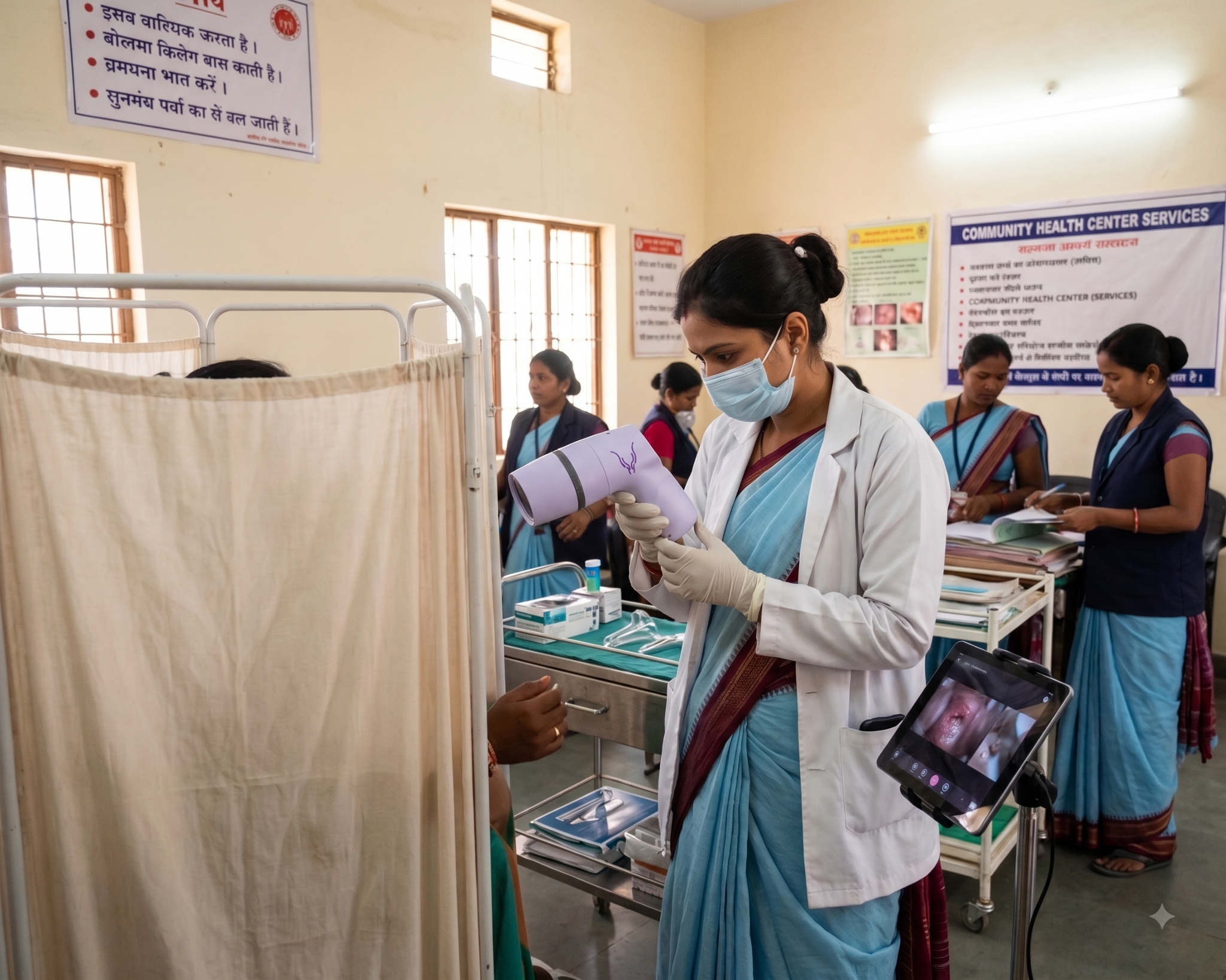
Integrating point-of-care, portable digital colposcopy directly at the CHC and District Hospital level enables a Single-Visit Screen-Triage-and-Treat protocol:
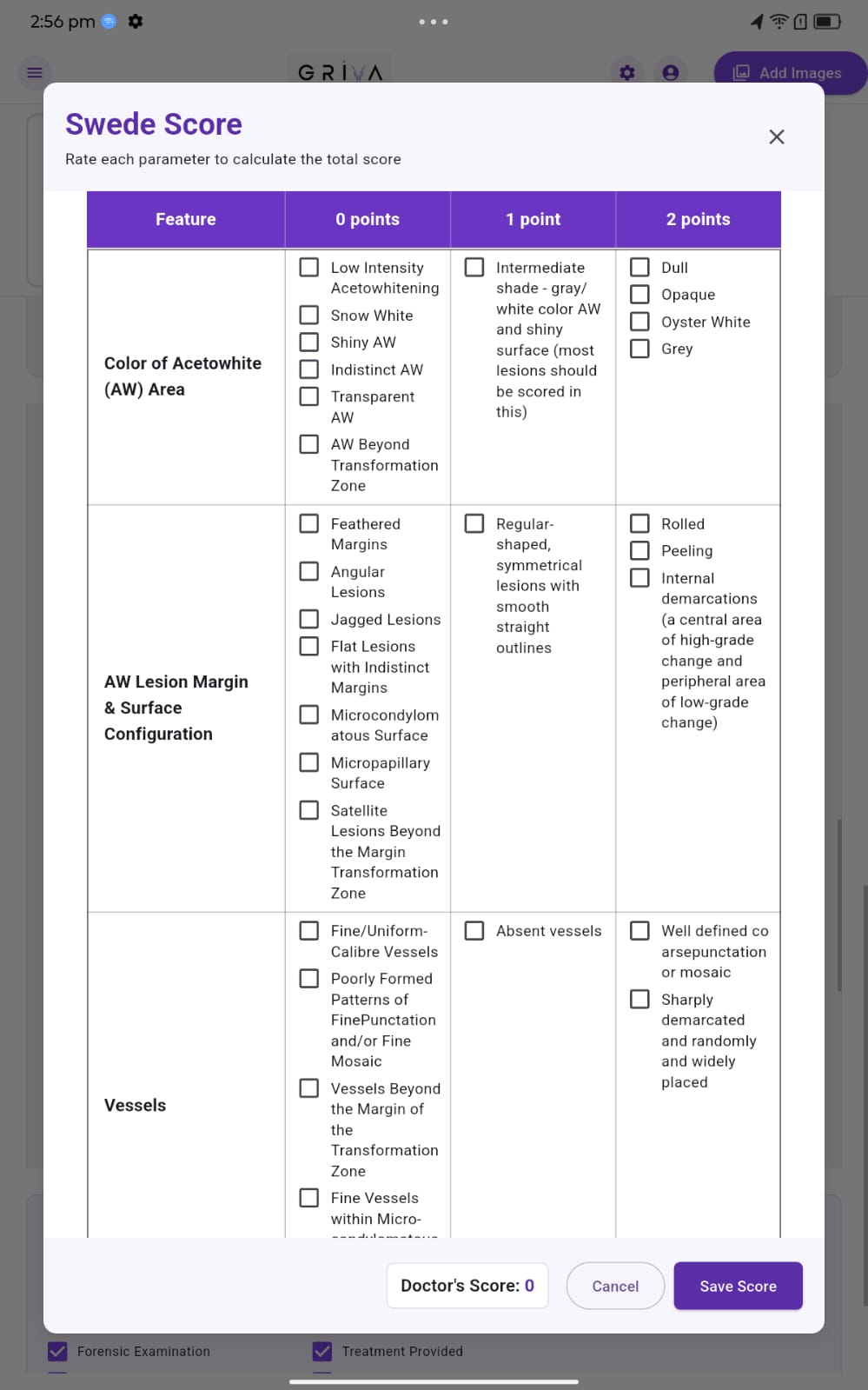
- Magnified Precision: High-definition optics and green-filter vascular evaluation allow clinicians to accurately inspect the Transformation Zone (TZ), identify lesion boundaries, and calculate standardized clinical scores (such as the Swede Score).
- Targeted Biopsies: Ensures biopsies are taken precisely from suspicious areas rather than relying on random quadrant sampling.
- Decentralized Capacity: Portable, battery-operated tools like GrivaVision allow trained medical officers, gynaecologists, and nurses to conduct high-grade colposcopic triage in field settings and primary centers without requiring full darkroom colposcopy suites.
Building a National Pipeline of Trained Colposcopists
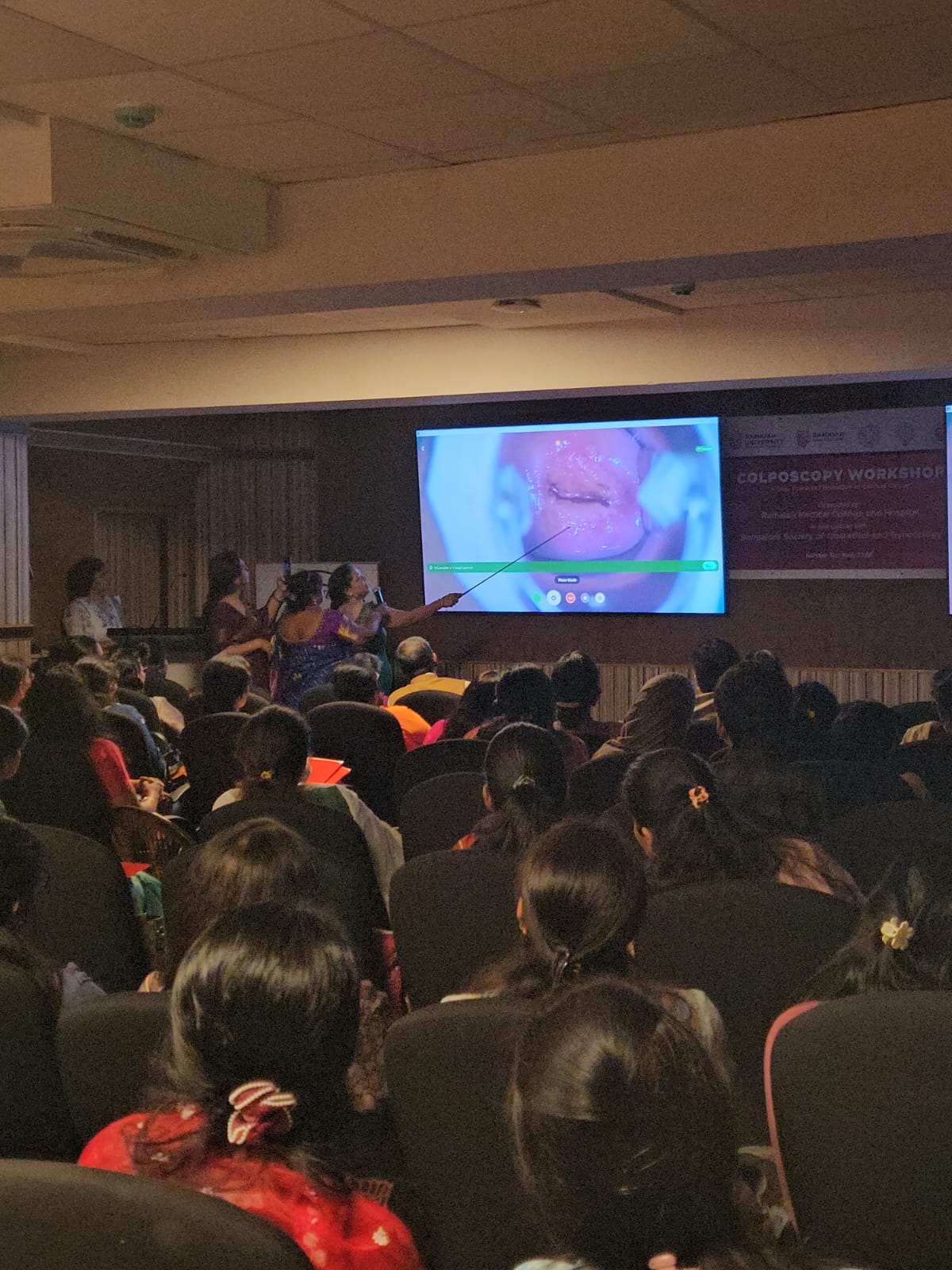
Equipment alone is only half the solution. Closing India's diagnostic gap requires building a structured national pipeline to train and certify gynaecologists, medical officers, and postgraduate residents in colposcopic evaluation.
Equipping district-level practitioners with standardized digital colposcopes and telemedicine-enabled review tools aligns diagnostic expertise directly with where the disease burden actually resides.
Transforming Screening into Survival
The Government of India's commitment to cervical cancer elimination provides a historic opportunity. By bridging the gap between primary screening and definitive treatment through decentralized, point-of-care colposcopy, India can prevent thousands of women from slipping through the care gap.
At Griva Healthcare, our mission with GrivaVision—developed under CDSCO Class B and ISO 13485 standards—is to empower public health systems and clinicians across every district in India with portable colposcopy technology that makes single-visit diagnosis a reality.
Join the Public Health Movement
Are you a public health administrator, healthcare director, or NGO leader working to enhance cervical cancer screening in your region? Partner with Griva Healthcare to explore point-of-care colposcopy solutions.