Pap Smear vs. VIA vs. Digital Colposcopy: A Clinical Comparison for Modern Outpatient Practices
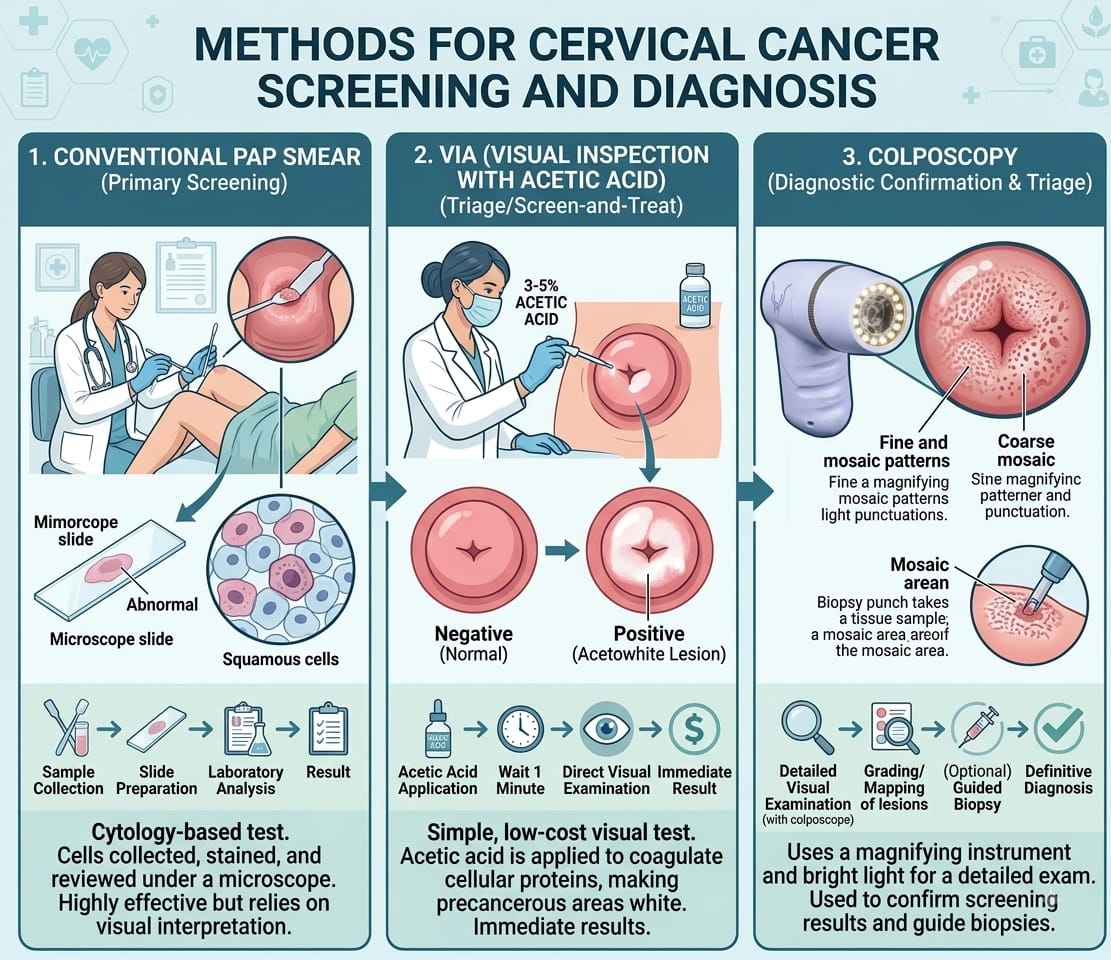
Early detection of precancerous cervical lesions remains the single most effective intervention to prevent cervical carcinoma. For decades, outpatient practices and screening programs have relied on two foundational modalities: Cytology (Pap Smear) and Visual Inspection with Acetic Acid (VIA).
While both modalities have significantly expanded population screening, clinicians in daily practice routinely face operational bottlenecks—including diagnostic turnaround delays, low sensitivity, variable specificity, and high patient loss-to-follow-up.
Modern point-of-care digital colposcopy has emerged as a transformative bridge between primary screening and definitive diagnosis. Below is a head-to-head clinical analysis comparing conventional tools with digital colposcopy to assist clinicians and medical directors in optimizing their diagnostic protocols.
Modality Comparison Matrix
| Clinical Parameter | Conventional Pap Smear | Visual Inspection with Acetic Acid (VIA) | Point-of-Care Digital Colposcopy (e.g., GrivaVision) |
|---|---|---|---|
| Diagnostic Output Time | 3 to 14 Days (Pathology Dependent) | Immediate (Naked-Eye Evaluation) | Immediate (Real-Time HD Digital Imaging) |
| Clinical Sensitivity | Moderate (~50%–70%) | Moderate to High (~60%–80%) | High (~85%–95% with Magnification & Software Support) |
| Clinical Specificity | High (~85%–95%) | Low (~60%–75%) (High False Positives) | High (~85%–92%) (Guided by Swede Scoring) |
| Operator Dependence | Sample Collection & Cytopathologist Dependent | Highly Dependent on Examiner's Visual Acuity | Standardized via High-Def Optics & Green Filter |
| Loss-to-Follow-up Risk | High (Due to Deferred Results) | Low (Single-Visit Potential) | Minimal (Enables Same-Day "See-and-Treat" or Guided Biopsy) |
| Patient Documentation | Text-Based Pathology Report | None (No Visual Record Maintained) | HD Digital Images, ABDM-Compliant Archiving & Tele-Consultation |
1. Pap Smear: High Specificity Compromised by Sensitivity & Delays
Conventional Pap cytology is a long-standing standard for cervical screening due to its high specificity. However, its primary clinical limitations in routine outpatient care center on sensitivity and logistics:
- Variable Sensitivity: Single-specimen Pap smears exhibit a false-negative rate ranging from 20% to 50%, often caused by sampling errors, inadequate cell fixation, or obscured blood/mucus.
- Turnaround Delays: Relying on external pathology labs creates a 3 to 14-day gap between sample collection and clinical consultation.
- Patient Attrition: Requiring a second visit for report collection leads to significant loss-to-follow-up—leaving potentially dysplastic lesions unmonitored.
2. VIA: Broad Reach Hindered by High False-Positive Rates
Visual Inspection with Acetic Acid (VIA) offers an immediate, low-cost option for broad screening drives, but presents severe diagnostic challenges in private and clinical settings:
- Low Specificity: VIA frequently misidentifies benign cervical conditions—such as immature squamous metaplasia, severe cervicitis, or physiological ectropion—as acetowhite positive lesions.
- Subjectivity: Without magnification or specialized lighting (such as green-filter vascular imaging), subtle lesions are easily missed, while benign changes are over-diagnosed.
- Lack of Record Keeping: Unmagnified naked-eye visual inspection leaves no objective visual baseline to monitor treatment progress or review during follow-up visits.
3. The Digital Colposcopy Advantage: Precision at the Point of Care
Point-of-care digital colposcopy combines the immediate feedback of visual inspection with the diagnostic rigor of magnified colposcopic evaluation.
A. Enabling the "Single-Visit" Protocol
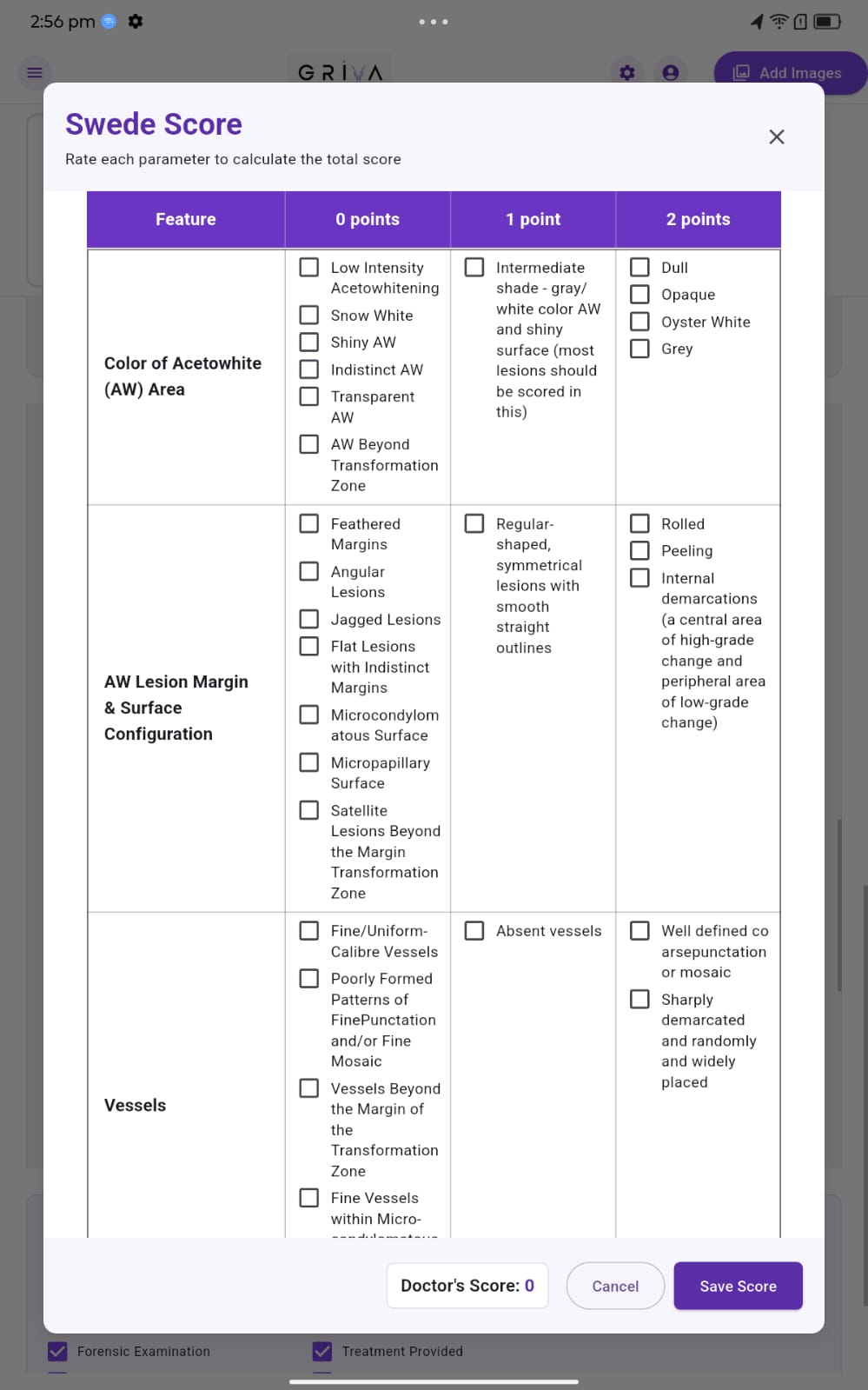
By visualizing the Transformation Zone (TZ), acetic acid reactions, and vascular patterns under magnification in real time, clinicians can perform immediate clinical scoring (e.g., Swede Score), take targeted biopsies, or initiate counseling in a single consultation—eliminating second-visit drop-offs.
B. Standardized Visual Grading
Modern systems utilize green filters for microvascular assessment (highlighting punctation, mosaicism, and atypical vessels) and digital zoom to distinguish true Cervical Intraepithelial Neoplasia (CIN) from benign acetowhite changes.
C. Digital Integration & Patient Communication
Showing real-time, non-invasive digital imagery on an integrated display improves patient understanding, enhances compliance with recommended follow-up or biopsy protocols, and generates ABDM-compliant digital health records for seamless longitudinal tracking.
Upgrading Outpatient Care with GrivaVision
Point-of-care digital colposcopy represents a vital evolution in modern gynaecological practice—bringing specialist-grade diagnostic precision directly into the consultation room.
Engineered under CDSCO Class B and ISO 13485 standards, GrivaVision provides high-precision optics, battery-operated portability, and intelligent software support in a compact device—allowing clinics, hospitals, and diagnostic centers to deliver fast, definitive, and patient-centered care.
Partner With Griva Healthcare
Looking to integrate point-of-care digital colposcopy into your clinic or hospital workflow? Contact our clinical team to schedule a demo or explore how GrivaVision fits your practice needs.